Dr. Ravinder Singh Rao, MD, DM, FACC
TAVR care in Mumbai
A new aortic valve without open-heart surgery. Transcatheter aortic valve replacement (TAVR) for people with severe aortic stenosis, with a structural heart specialist who has performed more than 700 TAVI procedures.
- No open-heart surgery
- Fellowship-trained in the USA
- OPD at Lilavati Hospital
700+
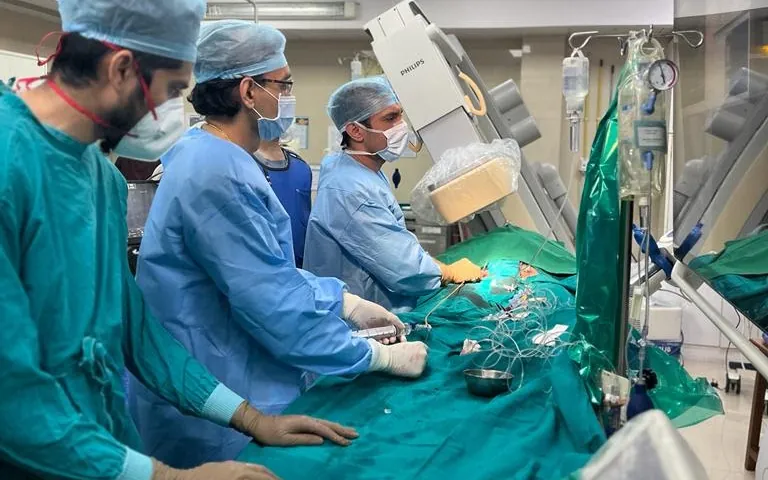
TAVI procedures performed by Dr. Rao
2
US fellowships: Mount Sinai, New York and Washington University, St Louis
2015
Practising in India since July 2015, after his fellowships in the USA
What is TAVR?
TAVR (transcatheter aortic valve replacement), also called TAVI, replaces a narrowed aortic valve without opening the chest. A new valve on a thin tube is guided to the heart through a blood vessel and opened inside the old one.
- The new valve usually goes in through a blood vessel in the groin
- The chest is not opened and a heart-lung machine is not needed
- Many people go home within a few days
Conditions we treat
Dr. Rao treats structural heart and complex coronary problems through catheters, without open-heart surgery.
Severe aortic stenosis
A narrowed, stiff aortic valve. Signs include breathlessness, chest pain, dizziness or fainting.
Treatment: TAVI / TAVR
Leaking mitral valve
The mitral valve does not close fully, so blood leaks backwards (mitral regurgitation).
Treatment: MitraClip repair
Leak around a replacement valve
Blood leaks through a gap between a replacement valve and the heart tissue (paravalvular leak).
Treatment: PVL closure
Worn replacement valve
A surgical tissue valve that has worn out over time.
Treatment: Valve-in-valve TAVR
Atrial fibrillation and stroke risk
In atrial fibrillation, clots can form in a small pouch of the heart called the left atrial appendage.
Treatment: LAA closure
Complex coronary artery disease
Hard, calcified or branching blockages in the heart’s own arteries.
Treatment: Complex angioplasty, including rotablation
Meet the doctor
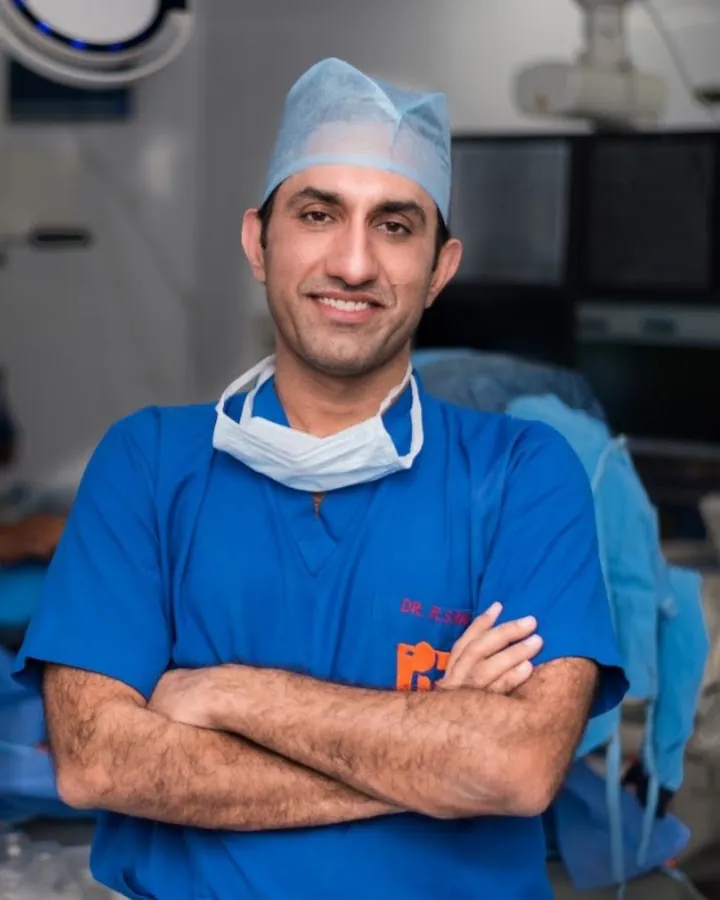
Dr. Ravinder Singh Rao is an interventional cardiologist who treats heart valve disease through catheters instead of open surgery.
He trained in interventional cardiology at Mount Sinai Hospital, New York, and in structural heart disease at Washington University School of Medicine, St Louis. He has practised in India since July 2015 and is Chief Interventional Cardiologist and Chairman of RHL Heart Center, Jaipur.
Your TAVR journey
1
Evaluation
Tests such as an echocardiogram and a CT scan show how narrow the valve is and whether TAVR suits your heart and blood vessels.
2
Procedure
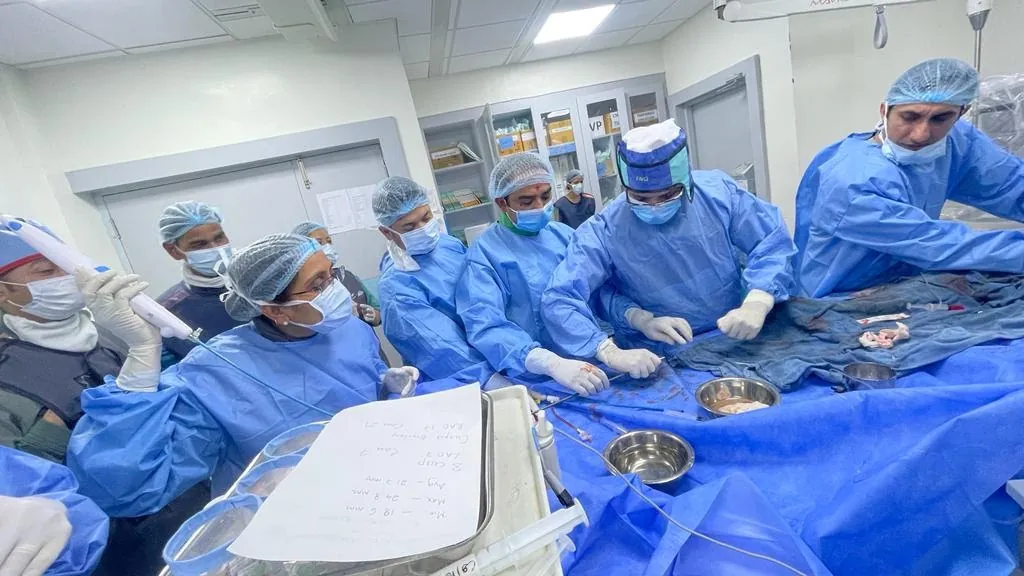
A new valve travels on a thin tube, usually through an artery in the groin, and opens inside your old valve. The chest is not opened.
3
Recovery
Many people are walking within a day or two and go home within a few days. Your team plans regular follow-up checks.
Patient resources
Patient stories, Dr. Rao’s explainer videos and plain-language guides for you and your family.


Guides and answers
For referring cardiologists
If your patient has severe aortic stenosis or another structural heart problem, Dr. Rao’s team can assess whether TAVR or another catheter treatment is suitable.
Helpful to share:
- A summary of the patient’s medical records
- Echocardiogram images from the past year
- CT scan and cardiac catheterisation images, if available
FAQs
Short answers to the questions families ask most. Your doctor can explain what applies to you.
Is TAVR open-heart surgery?
No. The new valve is put in through a blood vessel, usually in the groin, so the chest is not opened and a heart-lung machine is not needed.
Am I too old for TAVR?
Age alone does not rule TAVR out. Many people treated with TAVR are in their seventies, eighties or older. The heart team looks at your overall health, not just your age.
How long will I stay in hospital?
Many people go home within a few days. The exact time depends on your health and how the procedure goes.
Book a consultation
Find out whether TAVR is an option for you or your family member. If you have a recent echocardiogram report, please bring it.
Phone and WhatsApp: +91 78917 91586
Email: rsrao.sn@gmail.com
Consults at: Lilavati Hospital, Mumbai and RHL Heart Center, Jaipur. Please call to confirm timings.